The History of Tavernier
A place shaped by tides, tenacity, and timeless Old Florida spirit
Tucked between the iconic destinations of Key Largo and Islamorada, Tavernier Key offers a rare
window into a Florida that still moves to the rhythms of the tides and the trade winds.
Long before Tavernier became a peaceful retreat in the Upper Keys, it was a place shaped by the
sea, sustained by community, and defined by an independent, adventurous spirit that still
influences today. Its history is not loud or overbuilt. It is layered. Subtle. Best understood by
slowing down and paying attention to the unique details around every corner.
From Native Waters to Early Settlers
The story of Tavernier begins long before roads or railways. Indigenous peoples navigated these
waters for centuries, relying on fishing grounds and natural channels that made the Keys a vital
part of coastal life. Later, Bahamian settlers arrived, drawn by the promise of fishing and
commerce. Their influence remains deeply woven into the culture of the Upper Keys, from
architecture to cuisine to the relaxed rhythm of daily life.
The origin of the name “Tavernier” itself is debated but one theory is it is believed to trace back
to early French cartographers and mariners, meaning “host.” This serves as a reminder that this
stretch of coastline was once part of a global maritime map and that we have roots in
exceptional hospitality welcoming people from all walks of life. An energy Albury Landing brings
to guests today with our commitment to going above and beyond as hosts.
The Albury Family and the Foundations of Tavernier
The Albury family story is deeply embedded in Tavernier’s history and begins with their journey
from the Bahamas to the Florida Keys in the mid-nineteenth century. In 1882, Robert Joseph
“Uncle Joe Bobbie” Albury claimed land in southern Key Largo under the Homestead Act,
settling a narrow stretch between the ocean and bay near what was then known as Planter,
present-day Tavernier.
There, the Albury’s built simple oyster-shell cottages and laid the foundation for a community
that would endure for generations. By the early 1900s, the second generation emerged as
economic and civic trailblazers. William Dunham Albury sold land between mile markers 97.5
and 100 to the Model Land Company, helping pave the way for the Overseas Railway and, later,
the highway that connects the Keys today. He also supplied fresh fish to Flagler’s railroad crews,
a modest yet vital contribution to progress during a transformative era.
His son, William Beauregard Albury, carried forward the family’s industrious spirit with
remarkable resourcefulness. He hauled in up to 1,500 pounds of seafood daily using hand lines
while managing two farms: a fourteen-acre Key lime grove and a thirty-seven-acre plot
producing bananas, tomatoes, and other crops. In 1910, Beauregard built what is now known as
the Joseph Albury House for just fifty dollars plus room and board. That home withstood the
fury of the 1935 hurricane and remains a powerful symbol of resilience.
A decade later, Beauregard introduced the first automobile to the island, establishing the early
foundations for motor travel long before State Road 4A became the Overseas Highway. His son
Merlin would go on to serve as Tavernier’s first postmaster, and his home doubled as a center of
community life, even hosting Methodist worship services until a formal church was built.
The Railroad That Changed Everything
At the turn of the twentieth century, Tavernier’s future shifted dramatically with the arrival of
Henry Flagler’s Overseas Railroad. His legacy can still be learned about and experienced at
Flagler Station, an amazing restaurant in Islamorada just 20 minutes from Albury Landing. What
was once reachable only by boat became connected to the mainland, opening the Keys to
travelers, commerce, and growth.
But Tavernier’s history is inseparable from the forces that tested it. The devastating Labor Day
Hurricane of 1935 reshaped the Florida Keys, destroying the original railroad and altering the
region’s trajectory. Yet Tavernier endured. In the years that followed, it evolved into a beloved
haven for sport fishermen, nature lovers, and those seeking quiet authenticity along the water’s
edge. And although the original railroad was destroyed by the hurricane, its legacy lives on
today in the Overseas Highway, which still follows much of its original path.
Old Florida, Still Standing
Unlike other destinations that have leaned into rapid development, Tavernier remained rooted
in community. Its pace stayed slower. Its relationship with the water stayed personal. Fishing,
farming, and family-run businesses continue to define daily life to this day. And many of its
historic buildings were preserved rather than replaced, giving the area an authenticity that feels
increasingly rare.
One of the most tangible reminders of this past era is Old Tavernier Restaurant, housed in a
coral rock structure dating back to the early 1900s. Once a general store and gathering place, it
stands today as living history serving some of the best food in the Upper Keys. A locals favorite.
Nearby destinations such as Florida Keys History & Discovery Center offer a deeper look at the
region’s past, from maritime heritage to the hurricanes that shaped both the land and its
people.
Tavernier Today
Modern Tavernier is a thoughtful balance of past and present. Life here still revolves around the
water. Mornings start early, heading out to catch the best fish. Evenings slow down with a
cocktail in hand to admire the most stunning sunsets. And history is felt not through plaques,
but through the way the town moves forward.
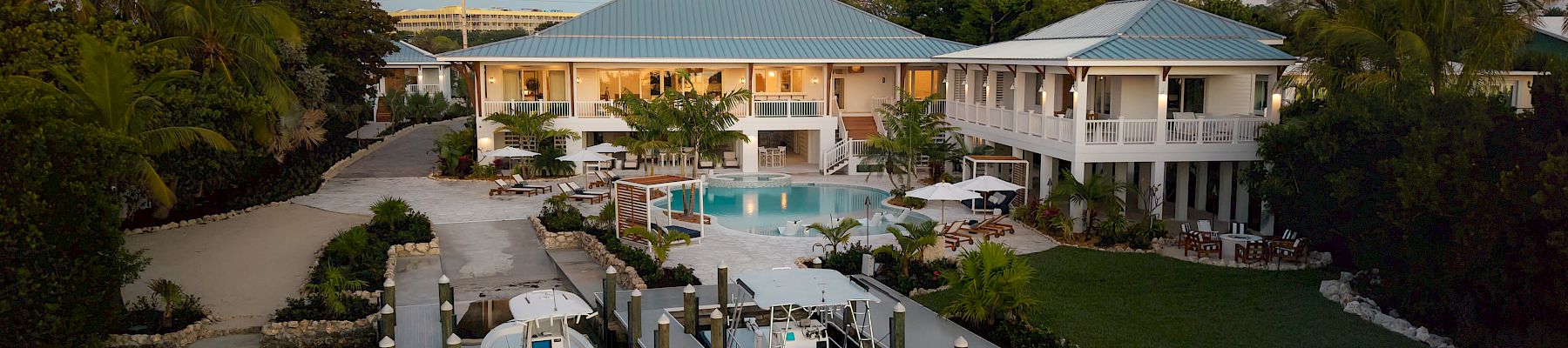
At Albury Landing, that history is honored rather than rewritten. The property reflects the
“Hemingway Chic” character of the Keys themselves. Timeless, coastal, and rooted in a sense of
place that values privacy, beauty, and intention. From its oceanfront setting to its thoughtfully
designed spaces, Albury Landing feels like a natural continuation of Tavernier’s story.